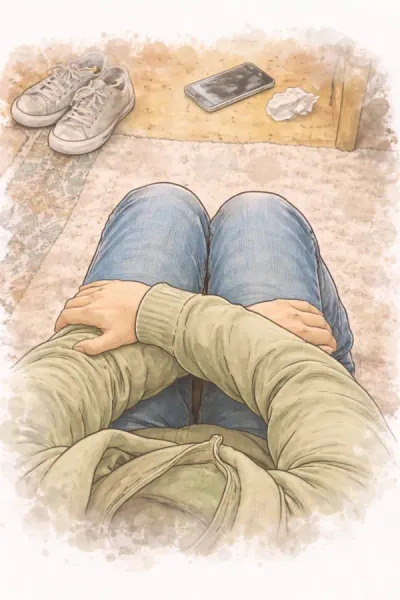
Childhood Trauma Self-Assessment
Reflects on your first 18 years – and helps you understand how early experiences may still be showing up in how you feel and function today.

What are adverse childhood experiences?
Adverse childhood experiences, often called ACEs, are the kinds of difficult experiences before age 18 that research has linked to long-term effects on health and wellbeing. They include things like emotional, physical, or sexual abuse, neglect, or household instability. Many people with high ACE counts live well; many with low counts struggle. This self-assessment helps you reflect on what you carry.
What this assessment explores
If you experienced a traumatic event – or events – in your childhood, this assessment gives you a quiet space to reflect on that. It looks at traumatic experiences from your first 18 years, and helps you start to understand how what you went through may still be shaping how you feel and function today. It's built on the ACE-Q, a widely used public health measure.
See the original scaleWhat you can expect
There are 10 questions, and they'll ask you to reflect on things you may have experienced growing up. Some might be easy to answer. Others might bring up things you haven't thought about in a while. That's okay – you can take your time.
The questions touch on two broad areas:
- Difficult experiences at home – like exposure to substance use, mental illness, or instability
- Experiences of abuse or neglect – emotional, physical, or sexual
Your responses give you a clearer picture of what you were navigating early in life, and a starting point for understanding how those traumatic experiences may have stayed with you.

Dr David Hegarty
Head of Psychometrics | Psychologist
Why this is free and private
Insightable Mind is built by clinical and research psychologists to help people better understand themselves, while contributing to meaningful psychological research. These assessments are offered free as part of that work. Your responses are private – when data is used for research, it's fully anonymized and combined with others to help improve the assessments and answer important questions about human psychology.
Top tips
Our best advice to help you get the most out of your self-assessment: