Autism and Masking Self-Assessment
Helps you reflect on ways you may adapt or mask autistic traits during social interactions, often to navigate or fit into social situations.
What is autistic masking or camouflaging?
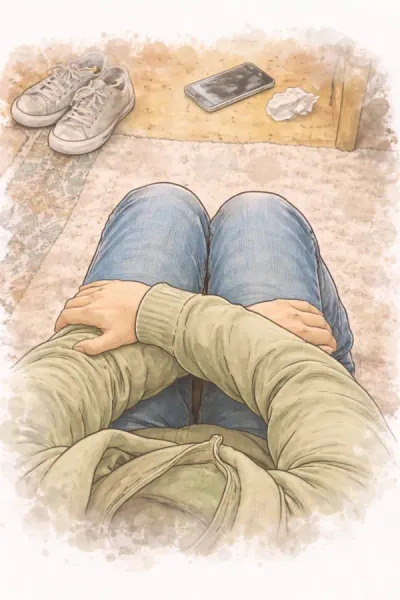
Masking, sometimes called camouflaging, is when autistic people consciously or unconsciously hide autistic traits to fit into social situations. It can look like rehearsing conversations, mimicking expressions, suppressing stims, or pushing through sensory overload. It's exhausting and often comes at a cost to wellbeing. This self-assessment helps you reflect on how much you may be masking, and where.
What this assessment explores
If you've always found social situations exhausting in a way that's hard to explain – or you've spent years learning how to appear a certain way just to get through the day – this assessment was made for experiences like yours. It explores the strategies you might use to camouflage or mask autistic traits, and is particularly relevant for women and gender diverse people who may have gone unrecognised for years. It's built on the CAT-Q, a validated measure designed specifically to capture what standard autism assessments often miss.
See the original scaleWhat you can expect
There are 25 questions, and they'll ask you to reflect on how you tend to navigate social situations – especially the effort that goes into them.
The questions touch on things like:
- Compensation – using learned scripts or copying others' behaviour to get through social interactions
- Masking – actively hiding or suppressing parts of yourself to appear more neurotypical
- Assimilation – modifying how you behave in order to fit in
Your responses give you a clearer picture of how much camouflaging you're doing – and what that might mean for your wellbeing.

Dr David Hegarty
Head of Psychometrics | Psychologist
Why this is free and private
Insightable Mind is built by clinical and research psychologists to help people better understand themselves, while contributing to meaningful psychological research. These assessments are offered free as part of that work. Your responses are private – when data is used for research, it's fully anonymized and combined with others to help improve the assessments and answer important questions about human psychology.
Top tips
Our best advice to help you get the most out of your self-assessment: